Part One · The life
I
The early years A racing family on the Thames, 1929–1947
Stirling Moss’s childhood, 1929–1947: a father who had raced at Indianapolis, a mother who won trials, a house on the Thames, Haileybury and a first Cooper.
I · The early years
Indianapolis, 1924
On 30 May 1924, the day he turned 28, a London dental student started the Indianapolis 500 from the penultimate row of the grid. Alfred Moss had gone to Indiana to study at the Indiana Dental College, then the world centre for bridgework, and, as many people assumed, for the race. His car was No. 28, a Fronty-Ford entered by two local Ford dealers, Barber-Warnock: a Model T with a cylinder head made by the Chevrolet brothers’ Frontenac company. He started 20th and finished 16th, the first dentist to start the 500. Of his two Barber-Warnock team-mates, Bill Hunt was 14th and Fred Harder 17th.1

A year later he was back at the Speedway as a relief driver for Herbert Jones. Then he raced a Fronty-Ford of his own at Brooklands, and in August 1925 won a Short Handicap at its Bank Holiday meeting. He raced there into 1926, and at Brooklands he met Aileen Craufurd. They married in 1928. Their son never drove in the 500, but in 1963, the year he gave up professional racing, he went to Indianapolis to watch it.
Alfred built a career in dentistry; by the count of Ken Gregory, later his son’s manager, he had 15 or 16 practices in London. His family, of Jewish descent, had been called Moses until about the turn of the century, when Alfred’s father changed the name. Aileen was of the family of Robert “Black Bob” Craufurd, of Wellington’s Light Division. She had driven ambulances in the First World War, she rode, and she drove in trials and rallies, in Singer and Marendaz cars and in a three-wheeled Morgan of her own. In 1936 she won the Ladies’ Experts Trial, and The Daily Telegraph later counted her, in all but title, the women’s rally champion of Britain. Her son was to carry her maiden name as his middle one. His first name, he told an interviewer in 2001, came from her home town; the sources do not say where Aileen was born.
I · The early years
Long White Cloud
Stirling Craufurd Moss was born in West Kensington, London, on 17 September 1929, the first child of Alfred and Aileen Moss, who were then living at Thames Ditton in Surrey.2 His sister, Patricia Ann, always Pat, was born at Thames Ditton in December 1934. While she was still a baby the family moved to Long White Cloud, a large house on the Thames at Bray, in Monkey Island Lane, near Maidenhead. The Maidenhead Heritage Centre has him in its Hall of Fame.
It was a house of motor cars. Both parents had competed, and Pat’s obituary remembered a home that always smelt of oil. In 1938, when Stirling was nine, his father bought him an old Austin Seven to drive round the fields.3
The children also rode, and rode competitively. Stirling won prizes at gymkhanas and junior shows; his winnings, about £50, went towards his first proper car. But riding was never his idea, and in later life he grumbled that a horse could not be steered. As he put it: “I always hated horses – I only rode them to please my mother.” (attributed) Pat was the horsewoman of the two, and went on to ride in the British show-jumping team.
I · The early years
Haileybury
I do think that my experiences at school turned me into a survivor. It set up a character. It made me a racer, as opposed to a driver. When I get in a car I want to win.
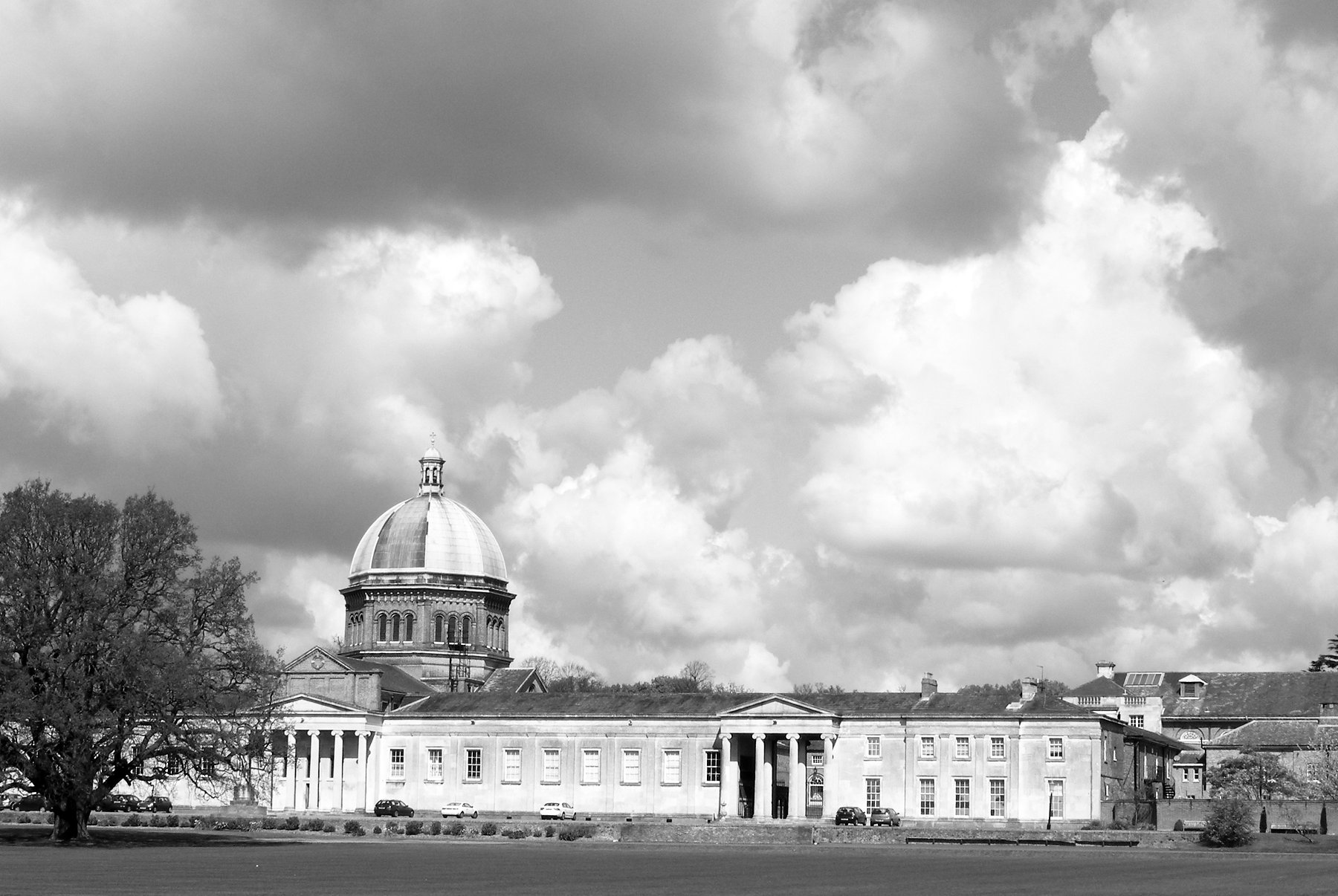
He went first to Clewer Manor, a preparatory school, and then to Haileybury and Imperial Service College at Hertford Heath, in Hertfordshire. There he was bullied for being Jewish. He did not tell his parents.
He was no scholar. He neither enjoyed his lessons nor shone at them, and he left once he had his School Certificate.
Bouts of illness, among them nephritis, an inflammation of the kidneys, ruled him out of national service, and his parents set about finding him a trade.
His father wanted another dentist in the family. Stirling did not want to be one. A crammer came first. Then he was sent into the hotel business as a trainee, at the Eccleston Hotel in Victoria under the name “Toni”, according to The Daily Telegraph; the 500 Owners’ Association has him working as a waiter and then as a night porter, a job for which, it says, he had no qualifications at all.
I · The early years
A licence at 15
He had a driving licence at 15, and soon a car: a Morgan, bought with his riding money and what he got for the Austin Seven. An MG followed. In 1947 he began to compete, in trials and rallies, in a pre-war BMW 328, his father’s car.4 His first event was a Harrow Car Club fixture, and he won his class. When he and Alan Henry set down every race of his career in All My Races, in 2009, the book began his racing life in 1947.
Trials were what his parents had done for fun. He wanted to race. That year he answered an advertisement for a racing car and ordered one, and when his father found out, the order was cancelled.
Stirling tried another way. He arranged to drive his father past the Cooper garage at Surbiton, and talked up the racing car in its window. Alfred gave way, on one condition: Stirling would pay for it himself. He sold most of what he owned and was still short. On his 18th birthday, 17 September 1947, his parents made up the difference. The car, a Cooper-JAP 500 Mk II, cost about £600.
It was delivered in 1948. In May he took it to the Prescott hill climb, and finished 4th in his class: his first event in a racing car.
Having said no, his father became his most useful ally. Alfred put up money when it was needed, and with Ken Gregory he was the third voice in every large decision of his son’s career. In 1954 the three of them formed Stirling Moss Ltd; later Alfred and Gregory ran a team of their own, the British Racing Partnership. And after the crash at Goodwood in 1962, Alfred was one of those who took turns at his son’s bedside, sitting with him through the night.
I · The early years
Pat Moss
Pat Moss came to motor sport not through her family but through a treasure hunt with her brother’s manager, Ken Gregory, who also took her on her first rally. She rallied her own Morris Minor, which she called “Granny”, then a Triumph TR2 from 1954, and joined BMC, driving an MG TF on the 1955 RAC Rally.
What she managed to do was amazing, actually … I don’t think she bothered about the differences. When the flag fell, she didn’t just want to beat the girls, she was out to beat the men as well.
In 1960, with Ann Wisdom beside her, she won the Liège–Rome–Liège outright in an Austin-Healey 3000, with wooden blocks fixed to its pedals because she was small: five foot four, by the BBC’s account, or a shade over five feet, by Motor Sport’s. It was the first win by a woman in a major international rally. Her brother told BBC Sport in 2015: “She used to say, ‘that damn Healey! I gave it three years to kill me and it nearly did!’”
She won the Tulip Rally in a Mini Cooper in 1962 and five European Ladies’ Rally Championships in all. After nine years with BMC she drove for Ford. In 1963 she had married the Swedish rally driver Erik Carlsson, known as “Mr Saab”, who won the RAC Rally three years running and the Monte Carlo Rally twice, and she joined him at Saab, finishing 3rd on a snowbound Monte Carlo Rally in 1965; then she drove for Lancia.
Pat and her parents also helped Gregory find the money for the Maserati 250F her brother raced in 1954.
From at least about 1950 the family farmed at White Cloud Farm, at Tring in Hertfordshire.5 Alfred lived there in retirement, and died of cancer, at Stoke Mandeville, on 23 April 1972, ten years to the day after his son’s crash at Goodwood. Pat died of cancer at her home near Tring on 14 October 2008, aged 73.
I · The early years
This Is Your Life
On 27 April 1959, when he was 29, the BBC’s This Is Your Life told his story back to him. The presenter, Eamonn Andrews, set the tone.
From boy to man, from obscurity to fame, from a bob a week pocket money to the salary of a prime minister - from start to finish, yours might be the story of one of your own racing engines: highly tuned, liable to blow up at times but the source of tremendous tireless energy.
The programme gathered the people of that story. Alf Francis, his mechanic since the HWM days, was there, and so was Ken Gregory, and so was Katie, his wife of a year and a half. In a staged surprise, an actor dressed as a motorcycle speed cop stopped him, early evidence of the link the public already made between Moss and the traffic police.
And there were his parents, who had raced for fun themselves and had once tried to keep him out of a racing car. His father, the dentist, joked about the career his son might have had. His mother answered for both of them.
The thing to make Stirling realise was that we did that for fun. We were amateurs. It cost us a lot of money, From a mother’s point of view, I’d much rather he were pulling out teeth - it’s much safer.
Notes
The Indianapolis Motor Speedway, Champ Car Stats and Motorsport Memorial give 16th. Some accounts say 14th, which was Bill Hunt’s place. ↑
West Kensington is the birthplace in F1DB and in the biographical note his son wrote for the order of service at Westminster Abbey in 2024. The Guardian names Thames Ditton: that was where the family lived at the time, and the two do not conflict. ↑
Nine, in 1938, in the fields at Bray, according to The Guardian, the Maidenhead Heritage Centre and the 500 Owners’ Association. The Daily Telegraph says he was seven and drove it in the family orchard. ↑
Wikipedia and the 500 Owners’ Association make the BMW, registered DPX 653, his father’s car, lent to him; The Guardian counts it among his own cars of the winter of 1947–1948. ↑
When the family moved to Tring is unsettled. A local historian’s caption says Home Farm, once part of the Rothschilds’ Tring Park, was renamed White Cloud Farm when Moss’s parents moved in, in 1950; another of his captions calls it the childhood home of Stirling and Pat. A Tring resident remembers Moss living there in the 1950s. The childhood was at Bray. ↑
Sources
Indianapolis Motor Speedway, “Racing legend Moss had no starts but interesting connections to Indy 500”, 14 April 2020. indianapolismotorspeedway.com
Motorsport Memorial, “Alfred Moss”, citing the Indianapolis News, 30 May 1925, and the Daily Express, 24 April 1972. motorsportmemorial.org
Champ Car Stats, “Alfred Moss”. champcarstats.com
Richard Williams, “Sir Stirling Moss obituary”, The Guardian, 12 April 2020. theguardian.com
“Sir Stirling Moss, British motor racing legend – obituary”, The Daily Telegraph, 12 April 2020. telegraph.co.uk
Westminster Abbey, A Service of Thanksgiving for the life and work of Sir Stirling Moss OBE, order of service, 8 May 2024. westminster-abbey.org
F1DB, release v2026.15.1, driver record of Stirling Moss. github.com
Alan Henry, “Pat Moss-Carlsson”, The Guardian, 27 October 2008. theguardian.com
John Davenport, “Obituary: Pat Moss”, Motor Sport, January 2009. motorsportmagazine.com
Ben Dirs, “Pat Moss: The racing legend’s sister who beat the men”, BBC Sport, March 2015. bbc.co.uk
“Top female rally driver dies”, Eaton Bray village news, 24 October 2008. eatonbray.com
Maidenhead Heritage Centre, “Stirling Moss”, Hall of Fame. maidenheadheritage.org.uk
500 Owners’ Association, “Stirling Moss”. 500race.org
Julia Llewelyn Smith, interview, The Independent, 2001, reprinted as “‘Life was super. It was all pretty girls’”, Atlas F1. atlasf1.autosport.com
Gordon Cruickshank, “Ken Gregory and Stirling Moss: a winning partnership”, Motor Sport, October 2009. motorsportmagazine.com
Chris Reynolds, “Drive to Woodlands Farm (formerly White Cloud Farm)” and “Horses on the fields at Home Farm, Tring”, Geograph. commons.wikimedia.org; geograph.org.uk
Porter Press, “Stirling Moss – some personal memories”, April 2020. porterpress.co.uk
OldRacingCars.com, “A. E. (Alfred) Moss”. oldracingcars.com
Val Pirie, “The Secret Life of Stirling Moss”, Motor Sport, November 2019. motorsportmagazine.com
Classic Motoring Books, “Stirling Moss: All My Races” (Stirling Moss with Alan Henry, Haynes, 2009). classicmotoringbooks.co.uk
“This Is Your Life: Stirling Moss”, BBC, 27 April 1959, as transcribed by the Big Red Book from Richard Williams, The Boy: Stirling Moss: A Life in 60 Laps (2021). bigredbook.info
_-_geograph.org.uk_-_1199966.jpg)